BLOGS
The Rise of Anti-Marketing
Why some brands are abandoning the polished sales pitch—and what happens when honesty becomes the message.
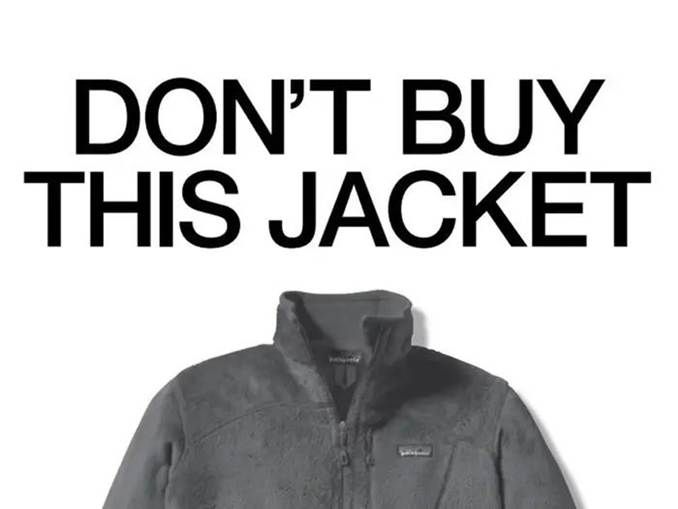
For decades, marketing had one job: to convince people to buy: bigger claims, bigger celebrities, bigger budgets. But somewhere in the last three years, a strange countermovement started outperforming the status quo: brands that undersell, self-deprecate, or openly tell people not to buy. Call it anti-marketing, and it is no longer a niche stunt. It is becoming a legitimate marketing strategy for building brand authenticity and consumer trust in a market that is growing numb to polish.
What is anti-marketing
Anti-marketing is not the absence of marketing; it is marketing that deliberately breaks the genre’s own convention. Instead of glossy aspiration, it uses honesty, humor, and outright refusal as the hook. Instead of “buy this,” the message is often “here’s why you might not need to,” or “do not buy this.”
The reason this works is not mysterious. Traditional advertising primes people to expect exaggeration, so the moment a brand admits a flaw or mocks its own hype machine, it reads as radically credible by contrast.
Case study: Surreal Cereal’s “Celebrity” Billboards
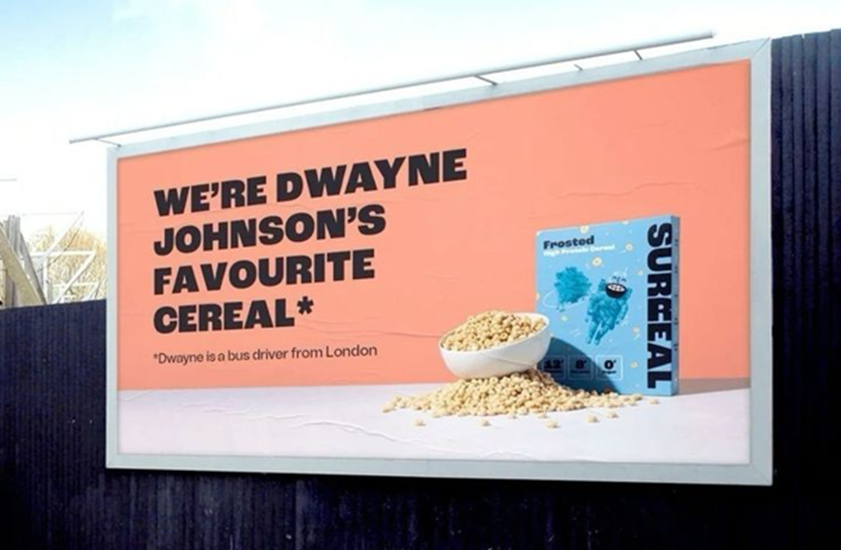
The clearest recent example is Surreal, the UK-based cereal brand that could not afford real celebrity endorsements, so it hired ordinary people who happened to share names with global stars. In March 2023, the brand ran an ad campaign citing endorsements from people with the same names as Serena Williams, Dwayne Johnson, Ronaldo, and Michael Jordan *1. Rather than investing in TV spots or polished brand films, Surreal built its growth on fake celebrity endorsements, self-aware billboard stunts, and openly comparing its nutrition stats to legacy competitors like Kellogg’s and Nestle *2.
Source: Pinterest
Why it worked: the joke does two things at once. It mocks the entire concept of paid celebrity endorsement, an ad format that the audience does not really trust, while still technically delivering a “celebrity” name in headline type. It is a wink that says we know you know this is fake advertising, which is precisely the honesty that modern audiences reward. The lesson for marketers is not “hire lookalikes.” It is transparent that naming the mechanics of persuasion can be more persuasive than hiding them.
Case Study: De-influencing as a Movement, not a meme
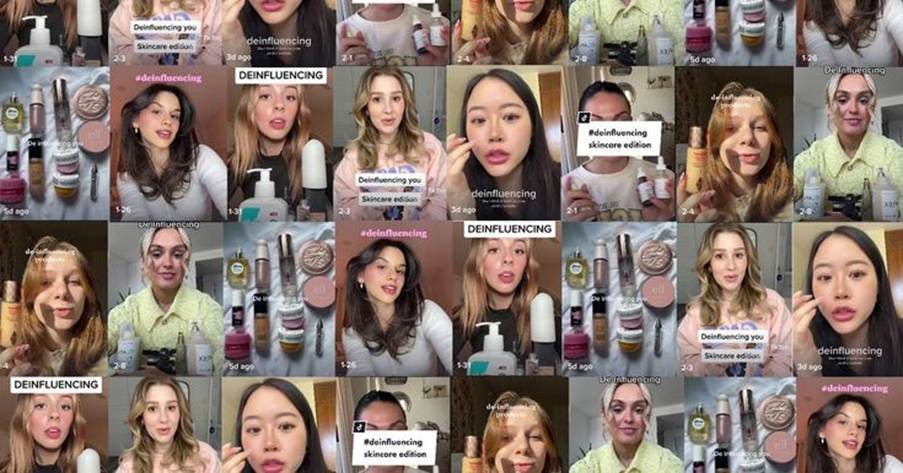
The bigger structural shift sits on TikTok, where “de-influencing,” creators telling followers what not to buy, has moved from fringe trend to mainstream behavior. Online conversations around de-influencing surged by more than 79% over the past year, reflecting a shift toward critical thinking and conscious spending rather than impulse-driven persuasion *3. This is happening against a backdrop in which influencer marketing is set to surpass $30 billion in 2025, with 88% of consumers reporting they have bought something based on an influencer’s recommendation, meaning the backlash is proportional to the industry’s own scale *4.
Source: Pinterest
What is genuinely interesting here, and worth analyzing rather than just nothing, is that de-influencing is not actually anti-consumption at its core. One industry analysis argues that de-influencing is not anti-marketing at all; it is better marketing, built on trust and empathy instead of impulse and illusion *5. This reframing matters: brands like Glossier and Sephora are not fighting the trend; they are absorbing it, leaning into user-generated, unfiltered reviews rather than curated campaigns because that is what converts now.
Why is it working right now?
Three forces are converging:
· Ad fatigue is measurable. Consumers scroll past thousands of polished ads a day. Friction (a flaw, a joke, an admission) is what actually stops the thumb.
· Social proof has shifted formats. A raw video calling out a flawed product now carries more weight than a paid testimonial, because the incentive structure looks less compromised.
· Trust has become the actual currency, not attention. Brands that perform humility are borrowing credibility from the very audiences that traditional advertising alienated.
Why is this not
Anti-marketing is not a shortcut for brands with weak products. Surreal’s stunts work because the cereal itself holds up in taste and nutrition comparisons; the joke is the delivery mechanism, not a cover for a bad offering. Brands attempting self-deprecating campaigns without a strong product underneath risk the joke landing as confirmation rather than charm.
There is also a category difference worth flagging: anti-marketing tends to work best for challenger brands with something to prove, precisely because it costs them nothing to admit they are small, imperfect, or self-aware; that admission is the differentiation. Legacy players attempting the same tone often stumble because a category leader mocking its own advertising can read as arrogance rather than humility, and audiences are quick to spot the difference between a brand punching up at its own hype and one performing modesty it has not earned.
Takeaway
Anti- marketing succeeds not because it rejects persuasion, but because it relocates it. Instead of asking audiences to believe an exaggerated claim, it asks them to believe the brand is self-aware enough to admit the game it’s playing, and that admission is the new form of trust. For marketers, the real skill is not copying the joke; it is identifying which parts of your own hype are worth undercutting first, before your audience does it for you.
Sources
- Surreal (cereal): Wikipedia: https://en.wikipedia.org/wiki/Surreal_(cereal)
- Surreal Cereal's Marketing Strategy: How They Built a £1.5M Brand: https://www.optimonk.com/surreal-cereal-marketing-strategy
- Deinfluencing: Why Transparency Is the Future of Influence: https://ansira.com/blog/deinfluencing/
- Deinfluencing Marketing: https://www.brandwatch.com/blog/deinfluencing-marketing/
- Deinfluencing: Why Transparency Is the Future of Influence: https://ansira.com/blog/deinfluencing/