CASE STUDIES
From a Child’s Treat to India’s Favourite Meetha: How Cadbury Dairy Milk Grew in India
How Dairy Milk expanded from a children’s treat into everyday celebrations, rituals, and gifting in India.
Introduction
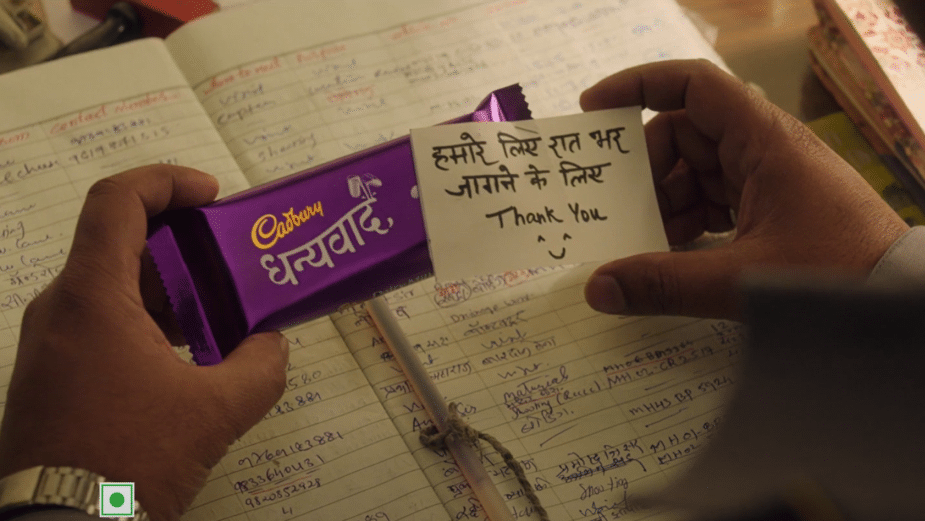
In May 2020, during the first COVID-19 lockdown, Mondelez India did something Cadbury Dairy Milk had not done in its 70 years in India. It removed its own logo from the wrapper and printed “Thank You” in eight languages, to salute frontline workers. Part of the proceeds went towards health insurance for daily wage earners, and the bar sold at ₹40 for 50 grams (Exhibit 6).
A brand does not give up its logo unless it is very sure of its place in people’s lives. That place was not always there. When Dairy Milk began to grow in India, chocolate was mostly seen as a treat that parents gave to children, and the real competition for a sweet moment was traditional mithai, not another chocolate bar.
This case asks how Dairy Milk moved from a children’s treat to a brand that sits in Indian celebrations, how it protected that position when its quality was questioned in 2003, and what its campaigns over 25 years suggest about growing a category, not just a share of it.
Background
The Brand
Cadbury made the first Dairy Milk bar in England in June 1905, with a higher proportion of milk than earlier chocolate bars. Cadbury began operating in India in 1948. Today the brand belongs to Mondelez India. Dairy Milk is the best-selling product in the company’s Indian chocolate business, with a reported market share of about 41% in 2018, while Mondelez as a whole held more than 65% (Exhibit 1).
Where Dairy Milk Sits in the Portfolio
Cadbury’s Indian range falls into five groups: core chocolate blocks and bars, gifting and assortments, premium and dark chocolates, bite-sized confectionery, and beverages and baking (Exhibit 2). Dairy Milk is the centre of that map. Silk is its premium step up, Celebrations reuses its taste for festive gifting, and Dairy Milk Shots turn it into a low-priced impulse buy.
The Market It Had to Grow
An executive told Indian Television that the early message was that chocolate is a nice treat for kids. The aim of later communication was to make the category socially and culturally relevant and to raise penetration, which stood at 19% in urban India in 1999. India’s chocolate market was reported at about ₹1,900 crore in 2009, with Cadbury holding about 70% of it, and at about ₹5,200 crore by fiscal 2014 (Exhibit 1, Note 3).
The Core Marketing Problem
Dairy Milk had strong awareness but a limited market, held back by three problems.
Who buys. Chocolate was positioned as a children’s product. Even if the brand won every child, growth had a ceiling.
When and why they buy. For Diwali, an exam result or after a meal, the first thought was a traditional sweet. Dairy Milk was competing for a place in a habit that already had a winner. Growing the category in this way is sometimes called a “share of stomach” strategy.
Where and at what price. Chocolate melts in Indian heat, and many small shops had no cold storage. In 2014, a regular 42 g Dairy Milk cost about ₹45, which was out of reach for most rural consumers (Exhibit 5).
From these problems, four objectives follow, drawn from the company’s actions rather than from a published list: widen the buyers beyond children, raise how often people buy, take a share of sweet occasions from mithai, and tie the brand to Indian rituals and milestones.
The Insight
In India, “meetha” means more than taste. Sweet food marks happy moments, new beginnings and celebrations. If Dairy Milk could attach itself to that idea, it would not have to teach a new habit. It could join an old one. Piyush Pandey of Ogilvy, the brand’s long-time creative agency, said the work in the late 1980s and again in the 2000s built relevance for Dairy Milk as a “modern meetha”.
How the Campaigns Unfolded
Exhibit 3 lists the campaigns in order. Each one added a new group of buyers or a new reason to buy.
1994: Breaking the Age Barrier
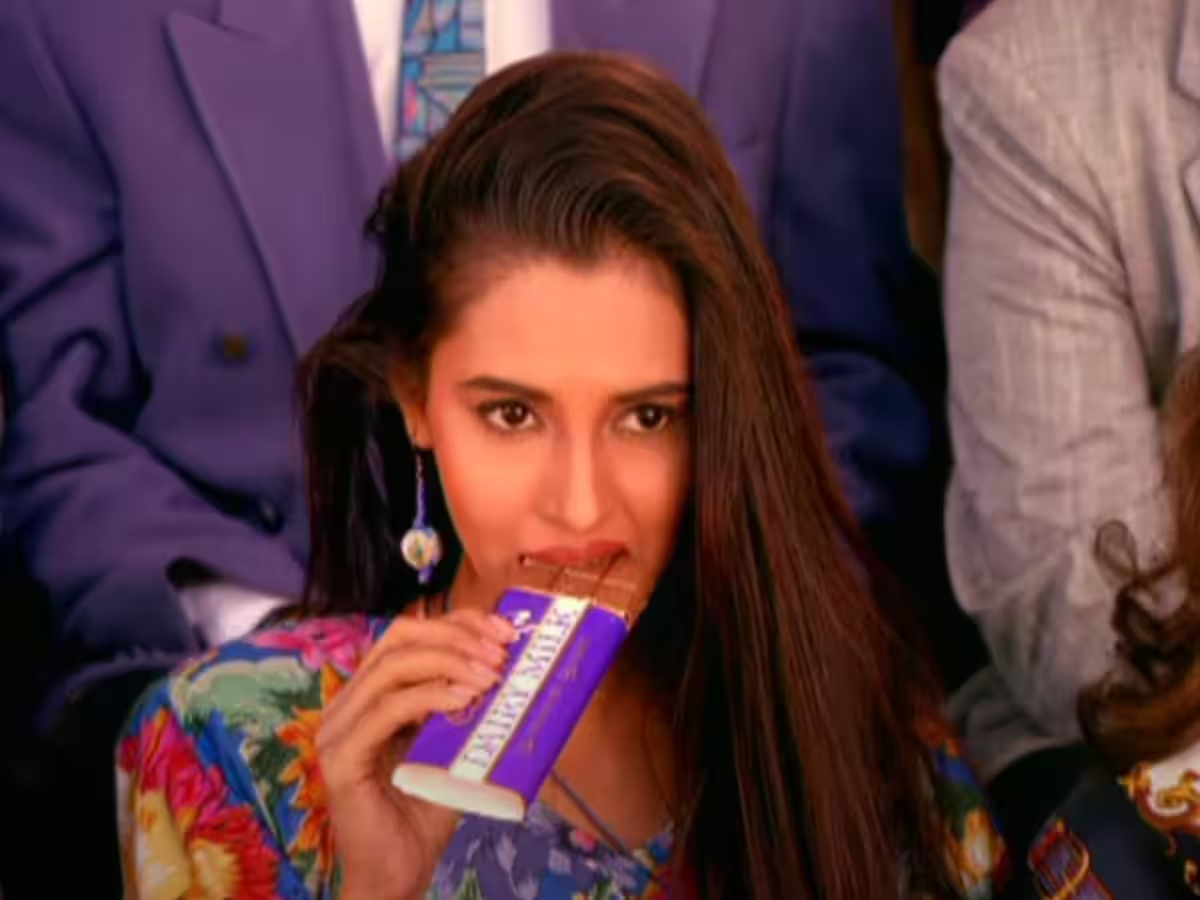
The brand’s best-known film shows a cricket match with the batsman on 99. His partner, played by Shimona Rashi, watches from the stands while biting into a bar of Dairy Milk. When he scores the century, she runs onto the field and dances. The film was conceived by Piyush Pandey at Ogilvy and carried the line “Asli Swad Zindagi Ka” (Note 1).
What mattered was who it showed. A young adult was enjoying chocolate for her own happiness, in public. Exchange4media’s account says the ad broke the stereotype of chocolate as a children’s product and tied it to adulthood. The audience widened from children to teenagers and young adults in one move.
Early 2000s: “Kuch Meetha Ho Jaaye”
Once adults were allowed in, the question was how often they would buy. The “Kuch Meetha Ho Jaaye” idea, built on the common phrase for “let’s have something sweet”, became the umbrella message for many later ads. The brand used habits Indians already had, such as ending a meal with something sweet, and placed Dairy Milk inside them.
2003 to 2004: The Worm Crisis
In October 2003, just before Diwali, a Maharashtra Food and Drug Administration lab report dated 6 October found insects in a Dairy Milk bar. Cadbury’s response had several parts (Exhibit 4):
Fix the pack. It imported machines to heat-seal a new metallic pack, at a reported cost of over ₹15 crore. The company decided to absorb the extra cost of about 15% and did not raise prices.
Fix the shop. Under Project Vishwas (“trust”), it educated about 190,000 retailers on how to store chocolate.
Fix the message. In early 2004 it raised advertising spend by over 15% and signed Amitabh Bachchan as brand ambassador. His first role, according to Cadbury’s marketing head, was to explain the improved packaging, and his early ads voiced consumer doubts and then answered them (Note 2).
2005: “Pappu Pass Ho Gaya”
With trust returning, the brand went back to giving people more reasons to buy. In the film, Amitabh Bachchan keeps a small corner store, humming the Kuch Meetha Ho Jaaye jingle. Young boys take chocolates and say “Paise Pappu dega”. He finally learns why: Pappu has passed his 12th standard exam. Cadbury executives said the core of Dairy Milk had always been happiness, and the ad stretched that promise to another moment of joy: a small success in a small town.
2009: “Aaj Pehli Tareekh Hai”
The next reason to buy came from the calendar. A clerk in a government office sings that today is payday, so let’s have something sweet. Business Standard reported a Mumbai watchman buying three Dairy Milk Shots packs at ₹2 each on 1 August to celebrate payday. The idea worked because the message and the low price point were aimed at the same buyer.
2010: “Shubh Aarambh”
Many Indian families eat something sweet before an important task. Ogilvy’s creative director described Shubh Aarambh as another cut on the long-running Kuch Meetha Ho Jaaye thought, rooted in the cultural truth of auspicious beginnings but given a youthful, contemporary flavour. This was a step into a space that traditional sweets had owned.
Festivals and Gifting
The biggest mithai market of all is festival gifting at Diwali and Raksha Bandhan. Cadbury Celebrations, a pack of mixed chocolates, was built for it, offering sealed packaging and a consistent taste in place of an unbranded sweet box (Note 5).
2018 to 2021: From Sweetness to Generosity
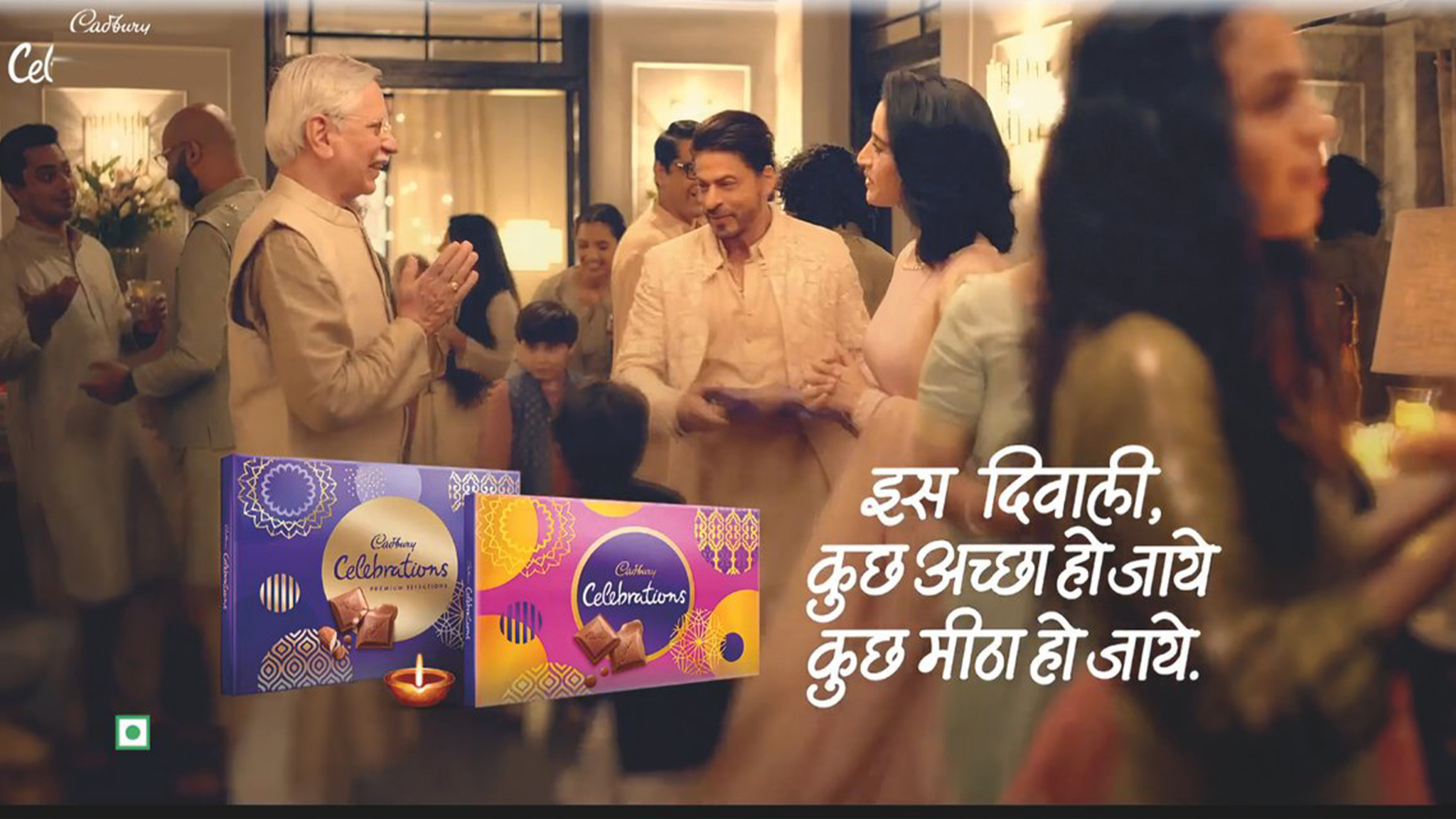
As the brand matured, the message moved from “something sweet” to something warmer. Its generosity narrative, “Kuch Achha Ho Jaaye, Kuch Meetha Ho Jaaye”, launched around the brand’s 70th year in India (Note 4). In 2020 came the Thank You bar (Exhibit 6). In 2021, the cricket ad was recreated with the roles reversed: the girl hits the century and her boyfriend dances, ending with #GoodLuckGirls and the line “Waqt Badla Hai, Zindagi Ka Swaad Nahin”.
Making It Affordable and Available
Good ads only work if the product is within reach. ValueNotes found that Mondelez had shown chocolate could be popular in rural India by offering smaller products at lower price points. The ₹2 Dairy Milk Shots were in 300,000 outlets in 2009, and the company planned to reach at least a million. Cadbury’s range then stretched from ₹2 to ₹75 a pack (Exhibit 5).
Results
Brand-level market share for Dairy Milk is not reported consistently. The public record shows Cadbury at about 70% of a ₹1,900 crore chocolate market in 2009, and Dairy Milk at about 41% and Mondelez at over 65% in 2018 (Exhibit 1, Note 3). The category itself grew much faster than any one brand’s share: from about ₹1,900 crore in 2009 to about ₹5,200 crore in fiscal 2014, and urban penetration was already 19% in 1999.
The crisis recovery is the clearest result. Cadbury held about 70% of the market when the worm story broke and, with a new pack, retailer education and Amitabh Bachchan, demand returned within months (Note 2). The cricket ad is still remembered, and the brand felt confident enough in 2021 to remake it.
Key Takeaways
Grow the category. If your real rival is a habit, as mithai was here, find where your product can replace it.
Join existing behaviour. After-meal sweets, payday and auspicious beginnings were all things Indians already did.
Expand in steps. Each campaign added one new group or occasion, building on the goodwill of the one before.
Fix the product before you talk. In 2003, the pack and the shop changed first, and the advertising followed.
Let price back the message. A ₹2 pack made the payday idea possible for working-class buyers.
Decision Points for Discussion
Target. The cricket ad widened the audience without saying that adults can eat chocolate. Why might showing work better than telling here?
Competition. Dairy Milk treated mithai as its rival, not Nestlé. What are the risks of defining a rival so broadly?
Consistency. Between 2005 and 2010 the brand ran Pappu, Pehli Tareekh and Shubh Aarambh. Did they build one idea or confuse buyers? What held them together?
Crisis. After the worm report, Cadbury’s early line pointed at retail storage before it changed its pack. What did it gain and lose by that sequence?
Price. Small packs widened the buyer base, but they can also weaken a premium image. How should a brand balance the two?
Purpose. Was giving up the logo in 2020 a brand risk or a sign of strength? What would make such a move feel authentic?
Notes
1. Sources date the cricket ad to 1993 or 1994. Most cite 1994, and Piyush Pandey has referred to a client in 1993.
2. A decline in sales of about 30% against expected growth of 15% is widely repeated, but it appears mainly in student case notes and not in a primary source, so it is not used here. Recovery is described as anywhere from about eight weeks to six months. The ₹15 crore machinery cost and the 190,000 retailers appear in several secondary accounts. Amitabh Bachchan’s start is dated to early 2004 in the Business World account.
3. The 70% figure in 2009 refers to Cadbury overall. The 41% and 65% figures in 2018 refer to Dairy Milk and Mondelez. Market-size figures for 2009 and fiscal 2014 come from different sources and may use different definitions, so the growth from ₹1,900 crore to ₹5,200 crore is indicative. Dairy Milk’s own share before 2018 was not found in a reliable source.
4. The date of the “Kuch Achha Ho Jaaye, Kuch Meetha Ho Jaaye” launch comes from coverage of the brand’s 70th year in India. The Mint article supplied by the case writer could not be opened.
5. The product portfolio (Exhibit 2) and the description of Celebrations come from the case writer’s own product-mix notes and have not been re-checked against a published source. Two figures in an earlier draft, an urban household penetration of under 5% before 1994 and mithai accounting for over 80% of sweet consumption, were left out because no reliable source was found.
Exhibits
Exhibit 1: The Indian Chocolate Market
Indicator | Figure | Year |
|---|---|---|
Urban penetration of chocolate | 19% | 1999 |
Chocolate market size | about ₹1,900 crore | 2009 |
Cadbury share of chocolate market | about 70% | 2009 |
Chocolate market size | about ₹5,200 crore (growing 15% a year over three years) | FY2014 |
Dairy Milk share of chocolate market | about 41% | 2018 |
Mondelez share of chocolate market | over 65% | 2018 |
Sources: Indian Television; Business Standard (2009); ConfectioneryNews (2014, citing ValueNotes). Different sources and definitions (Note 3).
Exhibit 2: Cadbury Product Portfolio in India
Group | Brands |
|---|---|
Core chocolate blocks and bars | Dairy Milk, Dairy Milk Silk, 5 Star, Perk, Fuse, Crispello |
Gifting and assortments | Celebrations |
Premium and dark chocolates | Bournville, Temptations |
Bite-sized confectionery | Gems, Choclairs Gold, Dairy Milk Shots |
Beverages and baking | Bournvita, Cadbury baking range (hot chocolate powder, cocoa powder) |
Source: case writer’s product-mix notes (Note 5).
Exhibit 3: Dairy Milk Campaign Timeline
Period | Campaign | What it did |
|---|---|---|
1994 | Asli Swad Zindagi Ka (cricket ad) | Showed chocolate as an adult pleasure |
Early 2000s | Kuch Meetha Ho Jaaye | Linked chocolate to “meetha” moments and daily habit |
2003 to 2004 | Worm crisis, Project Vishwas | Rebuilt trust with a new pack, retailer education and Amitabh Bachchan |
2005 | Pappu Pass Ho Gaya | Made a small win a reason to celebrate |
2009 | Aaj Pehli Tareekh Hai | Tied Dairy Milk to payday and the ₹2 Shots pack |
2010 | Shubh Aarambh | Put Dairy Milk in the ritual of an auspicious start |
Around 2018 | Kuch Achha Ho Jaaye, Kuch Meetha Ho Jaaye | Added generosity to the brand |
2020 | Thank You bar | Used brand purpose during COVID-19 |
2021 | Cricket ad remake (#GoodLuckGirls) | Linked an old memory to a changed India |
Sources: Exchange4media; AFAQS; Business Standard; Business World; case writer’s notes.
Exhibit 4: The 2003 Quality Crisis
Item | Detail |
|---|---|
Trigger | FDA lab report, 6 October 2003: insects found in a Dairy Milk bar |
Cadbury’s share at stake | about 70% of the market |
Retailer education (Project Vishwas) | about 190,000 retailers |
New pack | Sealed metallic pack; imported heat-sealing machines costing over ₹15 crore |
Cost impact | Product cost up about 15%; absorbed, with no price rise |
Advertising | Spend raised by over 15% in the first quarter of 2004 |
Brand ambassador | Amitabh Bachchan, from early 2004 |
Recovery | Reported from about eight weeks to six months (Note 2) |
Source: Business World.
Exhibit 5: Price and Availability Indicators
Indicator | Figure |
|---|---|
Dairy Milk Shots price, 2009 | ₹2 a pack |
Shots outlets, 2009 | about 300,000, with a plan for at least 1 million |
Cadbury price range, 2009 | ₹2 (Shots) to ₹75 (Bournville) |
Regular 42 g Dairy Milk, 2014 | about ₹45 |
Thank You bar, 2020 | ₹40 for 50 g |
Sources: Business Standard (2009); ConfectioneryNews (2014); Exchange4media (2020).
Exhibit 6: The 2020 Thank You Bar
Item | Detail |
|---|---|
Change to pack | Logo replaced by “Thank You”, a first in the brand’s 70 years in India |
Languages | Eight: English, Hindi/Marathi, Gujarati, Bengali, Tamil, Telugu, Kannada, Malayalam |
Price | ₹40 for 50 g, sold alongside other Dairy Milk price points |
Cause | Part of proceeds for health insurance for daily wage earners, via the NGO Nirmana |
Agency | Ogilvy India |
Source: Exchange4media.
References
1. Exchange4media. Hall of Ads: Asli Swad Zindagi Ka, the ad that changed how India celebrated forever. https://www.exchange4media.com/advertising-news/hall-of-ads-asli-swad-zindagi-ka-the-ad-that-changed-how-india-celebrated-forever-147392.html
Supports: the 1994 cricket ad, Piyush Pandey, Shimona Rashi, the stereotype of chocolate and adulthood (confirm date).
2. Exchange4media. (2021, 17 September). Cadbury and Ogilvy reimagine iconic ad with a gender role reversal. https://www.exchange4media.com/advertising-news/cadbury-ogilvy-reimagine-iconic-1993-ad-with-a-gender-role-reversal-115730.html
Supports: the 2021 remake, #GoodLuckGirls, the generosity narrative, the 1993 reference.
3. Indian Television. (2018). How Cadbury perfected its communication in India. https://indiantelevision.com/mam/how-cadbury-perfected-its-communication-in-india-180221/
Supports: 1905 origin, 41% Dairy Milk and over 65% Mondelez share, 19% urban penetration in 1999 (confirm date).
4. Storyboard18. Cadbury dancing girl to My SRK ad: what’s so khaas about Mondelez’s 75 years in India. https://www.storyboard18.com/quantum-brief/cadbury-dancing-girl-to-my-srk-ad-whats-so-khaas-about-mondelezs-75-years-in-india-10309.htm
Supports: Piyush Pandey on “modern meetha” (confirm date).
5. BW Businessworld. (2020, 3 August). When crisis led to consumer safety: The story of Cadbury. https://www.businessworld.in/article/When-Crisis-led-to-Consumer-Safety-The-Story-of-Cadbury/03-08-2020-304560
Supports: FDA report of 6 October 2003, Project Vishwas, 190,000 retailers, advertising spend, Amitabh Bachchan. The ₹15 crore figure is also in the IRM India repost.
6. AFAQS. (2005). Time for a Dairy Milk as Pappu finally clears his exams. https://www.afaqs.com/news/advertising/10707_time-for-a-dairy-milk-as-pappu-finally-clears-his-exams
Supports: the Pappu Pass Ho Gaya film and the happiness idea.
7. Business Standard. (2009, 17 August). Sweet taste of success. https://www.business-standard.com/article/management/sweet-taste-of-success-109081700036_1.html
Supports: Pehli Tareekh, 70% share of a ₹1,900 crore market, ₹2 Shots, 300,000 outlets, price range.
8. Business Standard. (2010, August). Well begun is half done. https://www.business-standard.com/article/management/well-begun-is-half-done-110080900041_1.html
Supports: Shubh Aarambh and the Ogilvy creative director’s description (confirm date).
9. Exchange4media. (2020, 25 May). Mondelez and Ogilvy applaud everyday heroes with limited-edition Thank You bars. https://www.exchange4media.com/marketing-news/mondelez-ogilvy-applaud-everyday-heroes-with-limited-edition-thank-you-bars-104846.html
Supports: the Thank You bar details.
10. ConfectioneryNews. (2014, 25 September). Untapped potential for chocolate makers in rural India, says ValueNotes. https://www.confectionerynews.com/Article/2014/09/25/Rural-India-chocolate-market-set-for-growth
Supports: ₹45 for a 42 g bar, smaller packs in rural India, ₹52 billion market in fiscal 2014.
Image Source
https://wavemakerglobal.com/our-work/growth-stories/cadbury-dairy-milk-thank-you