
CASE STUDIES
The Marketing of Military Aviation: How Fighter Aircraft Become Global Brands
A comparison of the positioning, partnerships, and national identities behind Rafale, Tejas, and the F-35.
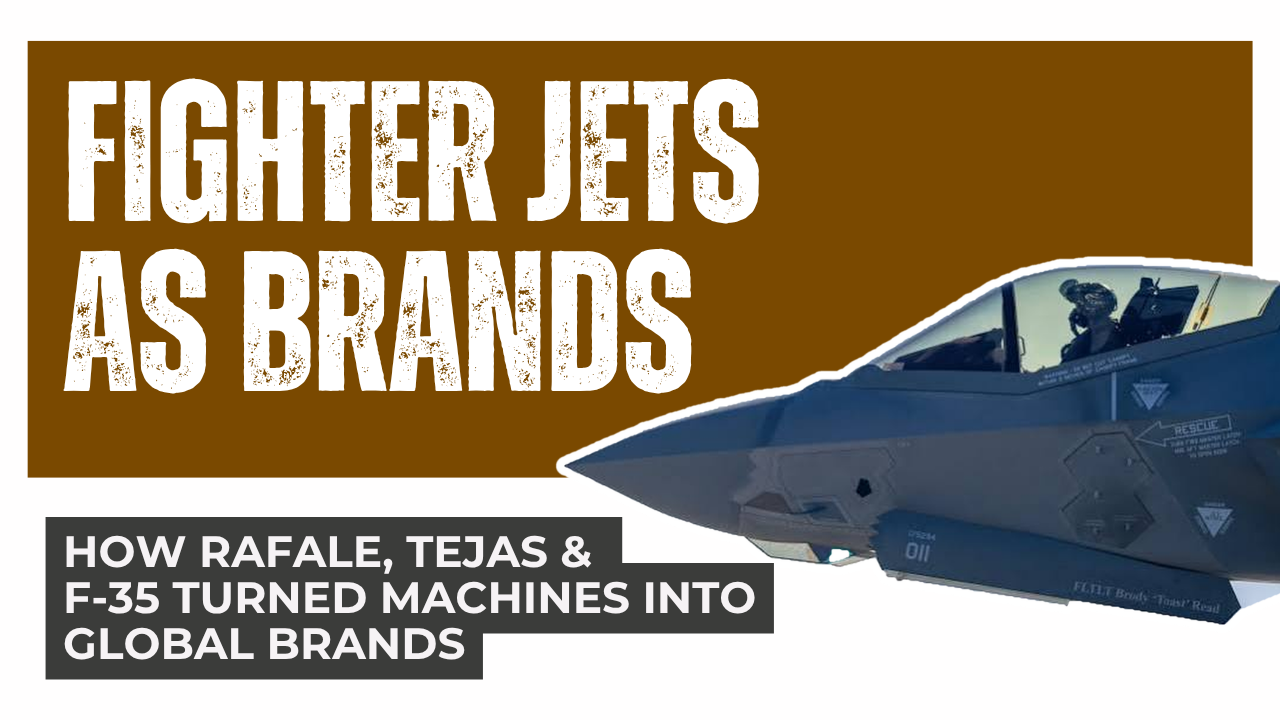
A comparative case study of Rafale, Tejas and F-35
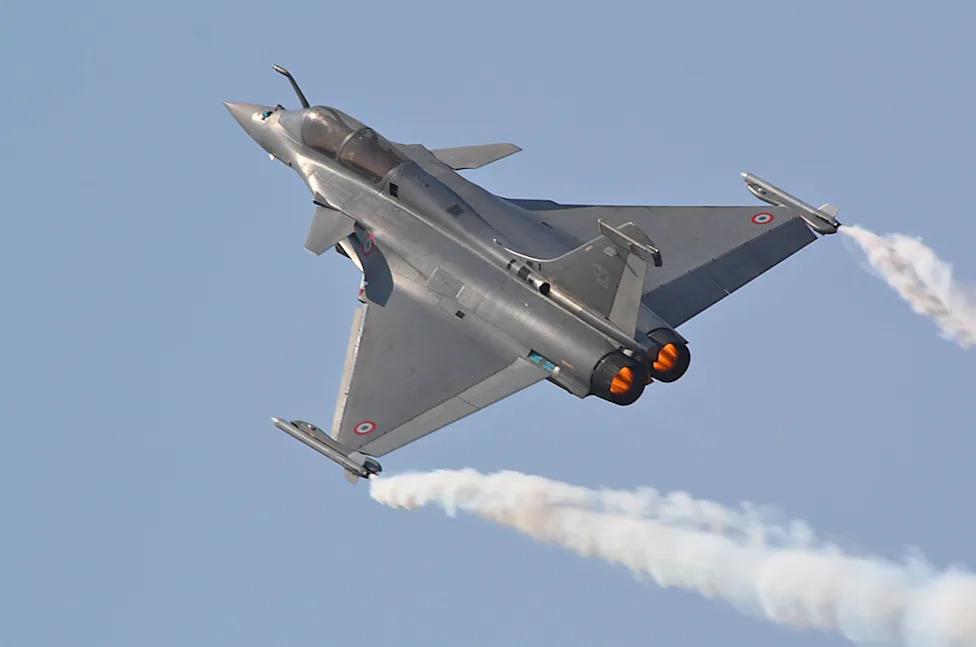
https://tech.yahoo.com/transportation/articles/top-11-best-fighter-aircraft-120151700.html
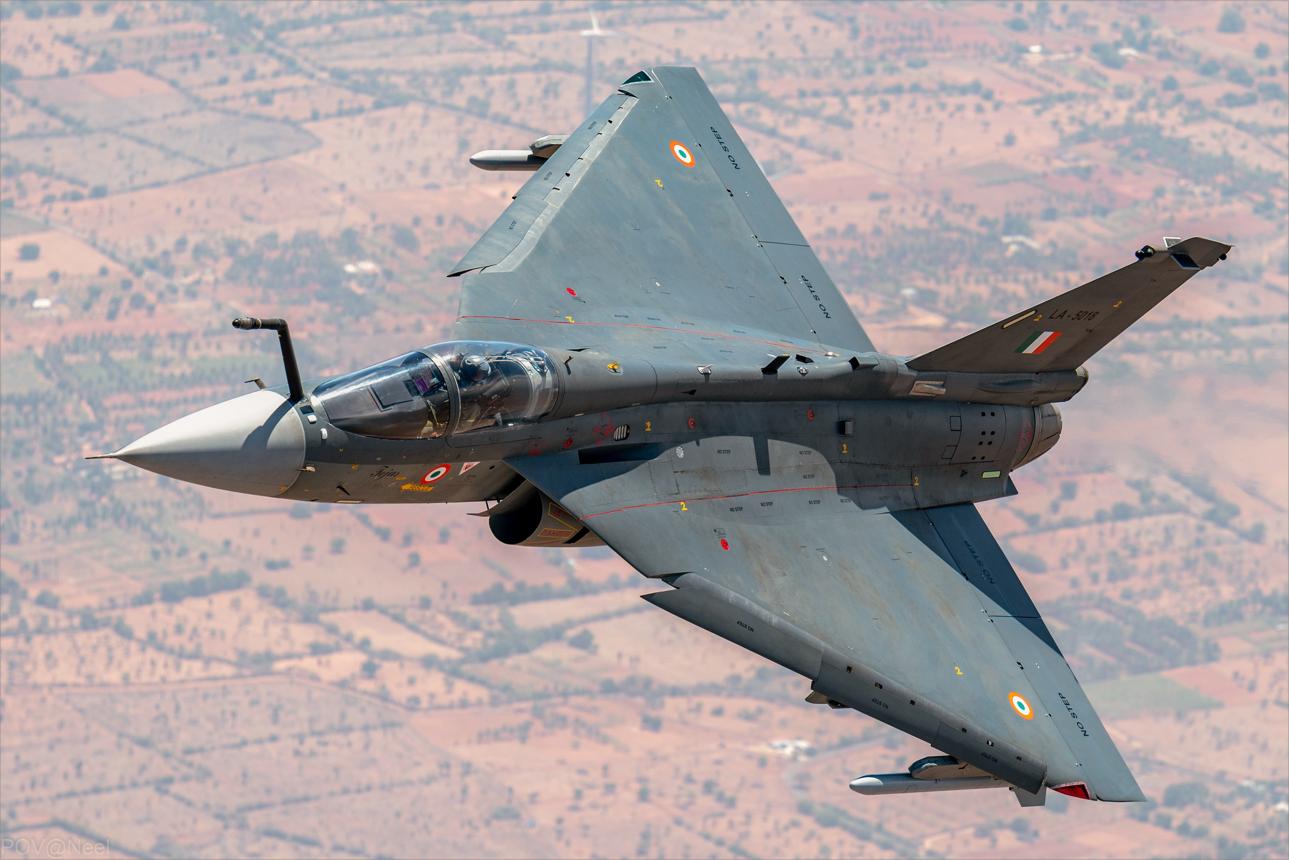
https://en.wikipedia.org/wiki/Sulur_Air_Force_Station
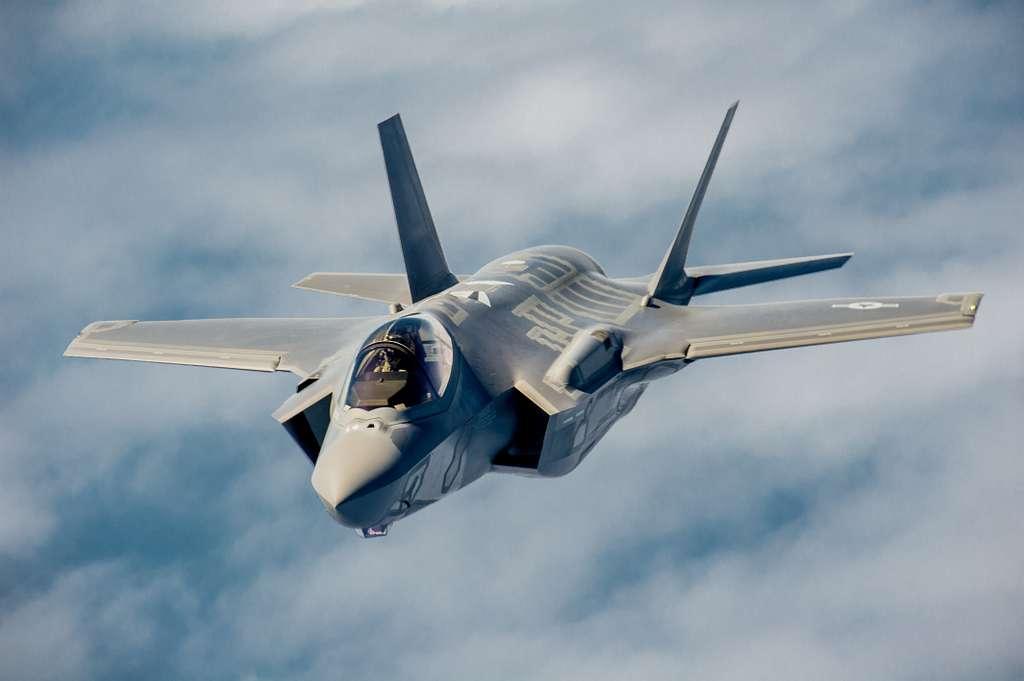
https://picryl.com/media/a-us-air-force-f-35a-lightning-ii-joint-strike-fighter-6f654e
Introduction
When countries buy fighter aircraft, they are not simply purchasing machines. They are making decisions about national security, technological capability, international partnerships and, sometimes, national pride. This makes military aviation an interesting example of how branding works in a market where the buyers are governments rather than individual consumers.
The Rafale, Tejas and F-35 offer three different approaches to this market. France's Rafale is positioned around versatility and proven performance. India's Tejas represents indigenous innovation and the ambition to build a stronger domestic aerospace industry. The American F-35 is marketed as a technologically advanced aircraft that also connects its users to a powerful international defence network.
Although all three aircraft serve similar broad purposes, their brand identities are quite different. Their stories raise an interesting marketing question: Does a country's reputation sell a fighter aircraft, or does the aircraft itself build the country's reputation?
Industry background and the core marketing challenge
The fighter aircraft market is unlike most commercial markets. A government may take years to select an aircraft, and a single contract can involve billions of dollars. Decisions are influenced by military requirements, acquisition costs, maintenance, technology transfer, diplomatic relationships and long-term strategic interests.
Unlike consumer products, fighter jets cannot be marketed through price discounts or conventional advertising. Instead, manufacturers use air shows, flight demonstrations, defence exhibitions, government-to-government negotiations, international partnerships and operational records to establish credibility.
The challenge is not just to convince a buyer that an aircraft is capable. It is to persuade the buyer that the aircraft is the right long-term choice for its country's specific needs.
This creates three distinct positioning challenges:
- Rafale: How can a European manufacturer compete internationally by presenting a high-performance aircraft with a strong record of export sales?
- Tejas: How can an emerging domestic aircraft brand build credibility against established global manufacturers while also promoting India's self-reliance ambitions?
- F-35: How can an expensive, technologically complex aircraft justify its value by offering capabilities and international cooperation beyond the aircraft itself?
Understanding the three brands
Rafale: The proven all-rounder
France | Dassault Aviation
The Rafale's positioning is built around versatility, operational experience and technological sophistication. Its ability to perform multiple missions gives it an advantage in markets where governments want a capable, multi-role aircraft rather than several specialised platforms.
Its export success also strengthens its image. Dassault reported 533 confirmed Rafale orders by the end of 2025, including 323 export orders. Its customers include India, Egypt, Qatar, Greece and the UAE.

Dassault Aviation
Tejas: The symbol of indigenous ambition
India | Hindustan Aeronautics Limited
Tejas carries a different kind of brand promise. Beyond its role as a light combat aircraft, it represents India's effort to develop its own aerospace technology and reduce dependence on foreign defence suppliers.
Its strongest differentiator is its national identity. For domestic audiences, Tejas is closely associated with self-reliance and technological progress. Internationally, however, its challenge is to establish a track record and convince potential buyers that its capabilities, support ecosystem and future upgrades meet their requirements.
F-35: The connected technology platform
United States | Lockheed Martin
The F-35 is positioned as much more than a fighter aircraft. Its marketing focuses on stealth, sensor fusion, information sharing and interoperability with allied forces. It is presented as a platform that connects air forces into a wider defence ecosystem.
Its international appeal is supported by a large programme involving the US and allied countries. Lockheed Martin reported more than 1,150 aircraft in service and 12 operating nations in its published programme overview.

Lockheed Martin
Marketing strategies: Three different positioning approaches
Technology and performance as brand differentiators
Technology is one of the most important ways manufacturers differentiate fighter aircraft. But the way they communicate that technology matters just as much as the technology itself.
The Rafale's marketing emphasises its multi-role capability and operational flexibility. Instead of presenting itself as a solution for only one type of mission, it offers the promise of handling a wide range of operational requirements. For a government evaluating long-term investment, this versatility can be a persuasive argument.
Tejas communicates a different story. Its light combat aircraft design, indigenous development and continuing technological improvements are central to its identity. Its appeal is closely linked to the idea that India can develop sophisticated defence equipment rather than relying entirely on imports. However, national pride alone cannot replace the need to demonstrate reliability, performance and support.
The F-35 takes a technology-led approach to another level. Its stealth design, advanced sensors and ability to share battlefield information are marketed as a combined advantage. The message is not simply that the aircraft has advanced features, but that these features change how an air force can operate.
The difference lies in the promise each brand makes: Rafale offers versatility, Tejas represents indigenous capability, and F-35 sells technological integration.
Country-of-origin marketing: Selling more than an aircraft
Country-of-origin marketing plays an especially important role in defence aviation. The reputation of the country manufacturing an aircraft can influence how buyers perceive its quality, reliability and strategic value.
France benefits from its established aerospace industry and reputation for developing sophisticated military equipment. The Rafale reflects this reputation while also giving France an instrument for strengthening diplomatic and defence relationships. Its sales to countries with different strategic priorities show how the aircraft can appeal beyond its home market.
For India, Tejas has a strong emotional and political association with the country's manufacturing ambitions. The Make in India and Atmanirbhar Bharat narratives give it a distinctive identity in the domestic market. This association can create goodwill and public support. However, international buyers will also evaluate its technical maturity, maintenance requirements, delivery schedules and operational history.
The F-35 benefits from the United States' position as a major defence partner for many countries. Purchasing it can mean access to a wider network of military cooperation, common operating systems and long-term relationships with the US and other programme participants.
This highlights an important distinction: country-of-origin marketing can create an initial advantage, but the final purchasing decision still depends on whether the product and its wider ecosystem deliver value.
Building trust through proof and partnerships
In a high-risk market, credibility is central to brand positioning. Buyers need confidence that an aircraft will perform over decades, not just during a demonstration.
The Rafale has benefited from its operational record and growing international customer base. Every successful export contract adds to its commercial credibility and creates a reference point for potential buyers. Its Indian Navy contract for 26 Rafale Marine aircraft, signed in April 2025, also demonstrates the value of expanding an existing relationship into a new application.
Tejas faces a different task. Its brand-building depends on demonstrating consistent operational performance, improving production capacity and building confidence among domestic and international stakeholders. Its long-term success will depend on whether the promise of indigenous development translates into dependable delivery and sustained support.
The F-35 uses the strength of its international programme as a major part of its marketing. Partner countries contribute to the programme, while a broad customer base helps create a shared ecosystem. This can reduce the perceived risk of choosing an aircraft by providing access to common training, maintenance and interoperability arrangements.
In this market, partnerships are not just a distribution strategy. They are part of the product's value proposition.
Market outcomes and what they reveal
The three aircraft illustrate different stages and forms of brand success. Their outcomes should not be compared solely through the number of aircraft sold, since their markets, programme structures and objectives differ.
Marketing dimension | Rafale | Tejas | F-35 |
|---|---|---|---|
Core positioning | Versatile, combat-proven fighter | Indigenous Indian capability | Advanced, networked airpower |
Main brand appeal | Performance and flexibility | National pride and self-reliance | Technology and allied cooperation |
Key differentiator | Multi-role capability | Domestic development | Stealth and integrated systems |
Primary market advantage | Established export relationships | Domestic strategic relevance | Large international ecosystem |
Main marketing challenge | Competing with other premium fighters | Building international credibility | Justifying cost and programme complexity |
A closer look at the evidence
- Rafale: Dassault's 2025 annual reporting recorded 323 export orders out of 533 total confirmed orders. This indicates that its positioning has translated into substantial international demand.
- Tejas: Its most visible market is India's domestic defence sector. Its significance lies not only in aircraft procurement but also in developing indigenous design and manufacturing capabilities. Its international brand-building remains a longer-term challenge.
- F-35: Its international programme includes numerous partner countries and foreign military sales customers. The programme's scale demonstrates how an aircraft can benefit from the network effects of a shared defence platform.
These outcomes show that a strong brand can be built in more than one way. Rafale demonstrates the value of product credibility and international sales. Tejas illustrates how national identity and industrial development can support a brand, even while its international commercial position is still developing. The F-35 shows how a company can differentiate its product by creating a broader ecosystem around it.
Critical analysis: What works and what doesn't?
The comparison also reveals some limitations in each positioning strategy.
Rafale: Strong credibility, but a competitive premium market
Rafale's combination of performance, flexibility and export experience gives it a strong market position. Its existing customer relationships also provide opportunities for repeat business and long-term support contracts. However, it competes in a market where other manufacturers offer advanced aircraft, and its premium positioning can make affordability and lifecycle costs important obstacles.
Tejas: A powerful identity that needs commercial validation
Tejas has a compelling story that connects technological development with national ambition. This gives it a unique position in the Indian market. Yet a strong national narrative is not sufficient to establish international competitiveness. For foreign buyers, delivery commitments, maintenance infrastructure, combat capability and a dependable supply chain will matter more than patriotic appeal. The challenge is to turn a strong domestic identity into a credible global brand.
F-35: An ecosystem advantage accompanied by complexity
The F-35 benefits from a positioning strategy that extends beyond aircraft specifications. Its international partnerships and shared infrastructure make it attractive to countries seeking closer military cooperation. At the same time, its sophisticated technology and large programme create concerns around acquisition costs, maintenance, software upgrades and long-term dependence on the wider programme. Its ecosystem is a competitive advantage, but it can also make the buying decision more complicated.
One important observation is that these brands are not competing on completely equal terms. The F-35 belongs to a multinational programme with a particularly large industrial and military network. Rafale has a mature export business, while Tejas is also serving the strategic purpose of building India's domestic aerospace capabilities. Their commercial performance must be understood in light of these different objectives.
Key marketing takeaways
The fighter aircraft market offers several lessons that apply to businesses in other industries as well.
- Positioning is about the promise, not just the product. Similar products can occupy very different positions when brands focus on different customer priorities.
- Country-of-origin can be a competitive advantage. A country's reputation, industrial strengths and international relationships influence how buyers perceive a product.
- Credibility is built over time. In markets involving high investment and risk, proven performance, existing customers and dependable support can be more persuasive than advertising claims.
- An ecosystem can become a differentiator. The F-35 demonstrates how training, technology, partnerships and maintenance can add value beyond the core product.
- National pride can generate interest, but performance sustains demand. Tejas highlights the importance of converting an emotionally appealing brand story into measurable product and operational credibility.
- Brand positioning must match the target market. A strategy that works for a country's domestic procurement priorities may not be equally persuasive to international buyers.
Conclusion
The Rafale, Tejas and F-35 demonstrate that even in a market driven by national security and government procurement, branding plays a significant role in shaping perceptions and influencing decisions.
Rafale has built its identity around versatility, performance and international credibility. Tejas represents the ambition of an emerging aerospace manufacturer to establish technological independence and develop a globally competitive product. The F-35 has positioned itself as an advanced aircraft supported by a wide international defence ecosystem.
What makes this comparison interesting is that none of these aircraft relies on technology alone to establish its identity. Each is associated with a larger story about the country and the organisation behind it.
Ultimately, the strongest lesson is that a successful brand does not simply communicate what its product can do; it gives buyers a reason to believe that choosing it is the right decision for their future.
References:
- Dassault Aviation. (2026). 2025 Annual Report.
https://www.dassault-aviation.com/wp-content/blogs.dir/2/files/2026/06/2025-Annual-Report.pdf - Dassault Aviation. Rafale – Official Dassault Aviation Website.
https://www.dassault-aviation.com/en/defense/rafale/ - Hindustan Aeronautics Limited. LCA Tejas.
https://hal-india.co.in/product/lca - Hindustan Aeronautics Limited. Official Website.
https://hal-india.co.in/ - Lockheed Martin. About the F-35.
https://www.f35.com/f35/about.html - Lockheed Martin. F-35 in Action – Global Enterprise.
https://www.f35.com/f35/global-enterprise.html - Lockheed Martin. F-35 Fast Facts.
https://www.f35.com/f35/about/fast-facts.html - Lockheed Martin. (2025). Lockheed Martin Finalizes Contract to Add Nearly 300 F-35s to Global Fleet.
https://www.f35.com/f35/news-and-features/Lockheed-Martin-Finalizes-Contract-to-Add-Nearly-300-F35s.html - Lockheed Martin. (2026). F-35 Breaks Delivery Record, Continues Combat Success in 2025.
https://www.f35.com/f35/news-and-features/F35_Breaks_Delivery_Record_Continues_Combat_Success_in_2025.html - Lockheed Martin. F-35 Partners.
https://www.f35.com/f35/about/F-35-Partners.html